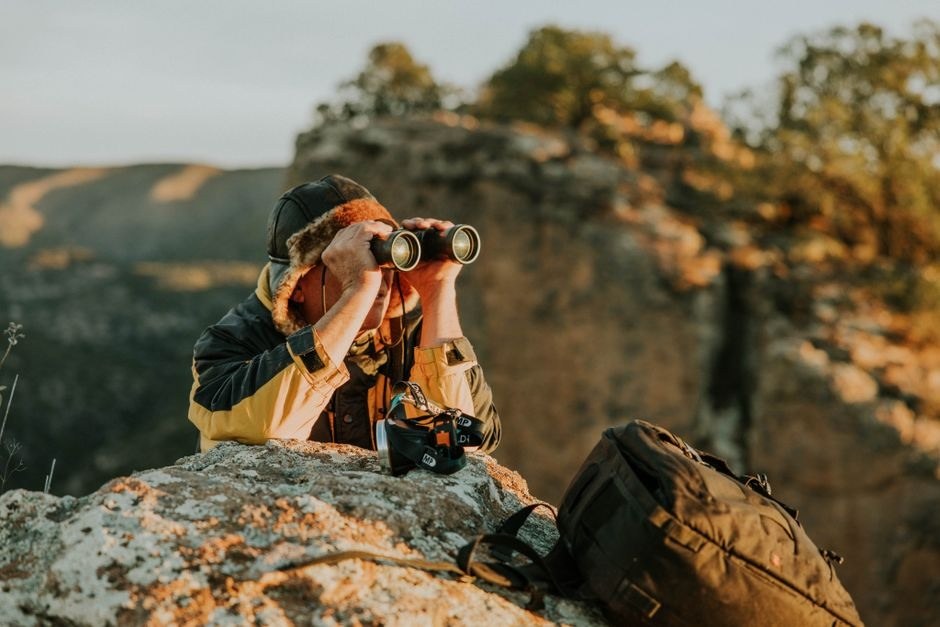
Most disappointing photographs are not caused by the camera. They happen because I saw the subject and pressed the shutter before I understood the rest of the frame. The fix is surprisingly simple: wait for a few minutes.
That pause is not dramatic. I do not meditate on the scene or search for a perfect composition. I stand somewhere safe, look around, and give the light and background time to become as noticeable as the main subject.
Arrive before the picture
When I reach a viewpoint, street corner or open stretch of landscape, the first composition is usually the most obvious one. It is worth taking a quick reference frame, especially if the light is changing fast, but I try not to treat it as the finished photograph.
Instead I ask what is actually holding my attention. Is it the shape of a ridge, a person moving through the scene, a bright patch of late light, or the contrast between something near and something far away? Naming the attraction privately helps remove elements that do not support it.
Watch the edges
The centre of the frame gets too much credit. Small distractions tend to gather at the borders: half a sign, a bright bin, the end of a branch, a stranger cut awkwardly by the edge. Before taking the next frame, I scan all four sides and make tiny adjustments with my feet rather than relying on cropping later.
Moving thirty centimetres can also change the relationship between larger objects. A tree that was merging with a building separates cleanly. A path becomes visible. A patch of sky opens between two hills. These are small physical changes with a surprisingly large effect on how a picture reads.
Take the first frame, then stay
Once the composition works, I take the photograph and keep watching. People move. Clouds uncover the sun. A breeze changes the grass. The scene that looked static begins to offer variations, and I can choose rather than react.
This is especially useful when photographing places rather than events. There is usually no need to rush. If the light is flat, I can look for layers, texture or a foreground detail instead of waiting for spectacle. If the light is strong, I can watch where shadows land and decide whether they simplify the frame or make it busier.
Leave with one detail
Before moving on, I make one close photograph of something that explains the place at a smaller scale: worn paint on a railing, grass bent by wind, a trail marker, stone underfoot, or the way a strap is resting beside a backpack. These detail frames rarely become the obvious favorites, but they make a group of photographs feel more complete.
The five-minute pause has changed how I use a camera. I take fewer near-duplicates, notice backgrounds earlier and remember locations more clearly. The habit is less about patience than about sequence: first see the place, then decide what the photograph is for.